
How to Start OnlyFans as a Woman: A Practical Beginner’s Guide
If you are researching how to start OnlyFans as a woman, the most useful first step is deciding what you want to offer, what stays private, and how much time and money you can afford to test. An account is only one part of the work.
A sensible starting sequence is to set your boundaries, make a privacy plan, check the platform’s current requirements, define a manageable offer, and run a small first-month test. You may decide to proceed, wait, or choose a different income route. Each is a valid decision.
This guide is for adults considering subscription content. It covers practical planning rather than promises of fast earnings. Images are AI-generated editorial illustrations; the people shown are not presented as real OnlyFans creators. General education only; personal legal and tax questions need qualified advice.
What this beginner guide covers
- Deciding whether it fits and setting boundaries
- Protecting your privacy and accounts
- Understanding costs, pricing, and take-home pay
- Preparing your account, profile, and first content
- Promoting a new page without a large following
- Planning and reviewing your first 30 days
- Common questions before you start
1. Decide whether this fits your life and boundaries

Subscription content can offer a way to package your work and build relationships with paying supporters. It also brings production, promotion, customer service, and administrative tasks. Flexible hours still need a schedule, and publishing a page does not guarantee demand.
Start with three questions: Could I cover essential bills if this earns nothing? Would I still choose it if someone I know found the page? Can I decline a paid request that crosses a limit? If any answer raises a concern, address that concern before publishing.
Write a yes, no, and access list
- Yes: themes and formats you freely choose to offer, such as creative projects, fitness updates, or behind-the-scenes content. Check that every format fits the platform’s current rules.
- No: content, requests, personal details, or interactions you will not offer. You do not need to explain a private reason to a customer.
- Access: when you answer messages, how often you post, and what a subscription does and does not include.
For example: “I post two scheduled updates each week and answer messages on weekdays. Personal contact details and meetups are not offered.” Specific limits make expectations easier to manage.
Prepare a short response for requests outside your offer: “That is outside what I offer. Please keep requests within the limits on my profile.” Set a pause condition, too: costs exceeding your cap, repeated harassment, or pressure to create something you do not want to make. You can stop even after investing time.
2. Make a privacy plan before you create a public profile

A stage name can separate your public brand from your legal name, but it cannot promise anonymity. Faces, voices, tattoos, familiar rooms, location clues, and connections between accounts can identify someone. Faceless content still requires a privacy plan.
- Use a separate creator email and unique passwords. Enable multi-factor authentication where offered and store recovery codes securely. NIST explains how MFA adds protection beyond a password.
- Review contact syncing, account suggestions, linked profiles, shared cloud albums, and notifications. A separate username is not enough if your accounts reconnect through other settings.
- Inspect the final image or video for mail, addresses, work badges, reflections, local landmarks, recognizable backgrounds, and unintended people.
- Review camera location settings and file metadata. Do not assume an upload service removes every identifying detail. Avoid sharing your live location.
- Protect shared devices, backups, and account recovery access. Keep private documents outside folders used for public content.
Watermarks can help identify ownership, but they do not prevent screenshots or copying. A VPN does not hide details visible in your content. Location restrictions, where offered, should be treated as partial barriers.
Public anonymity and platform verification are different
Your audience-facing stage name does not replace accurate identity information required by a service. Submit documents only through official verification channels. Never send an ID, password, or recovery code to someone who contacts you with a promotion or account-approval offer.
Plan for the possibility that content remains in circulation after an account closes. That does not excuse anyone who misuses it; it means complete future removal is not a reliable planning assumption.
3. Understand the costs before setting your subscription price

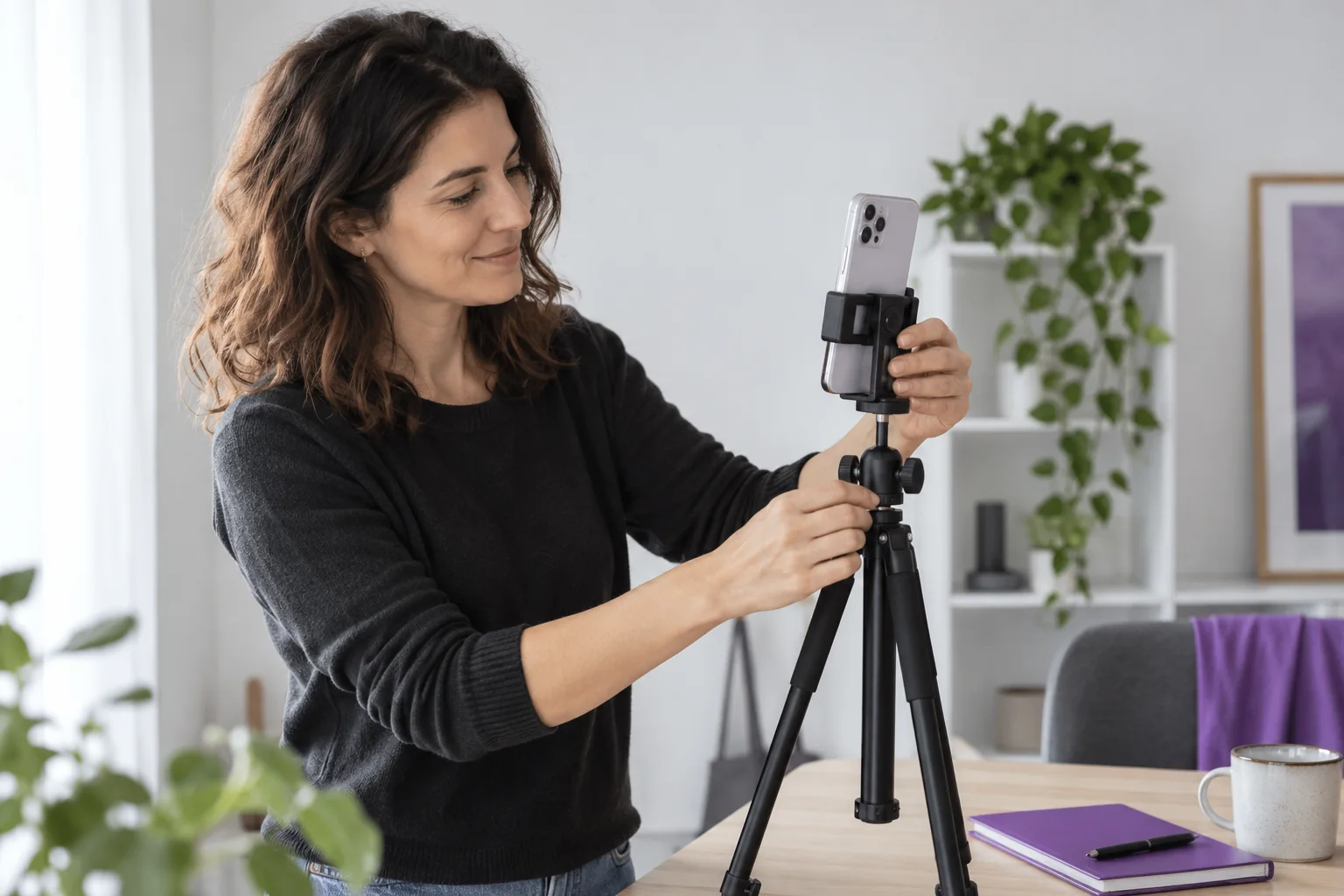
You can begin testing with equipment you already own: a suitable phone, a stable place to record, and available light. Buy additional equipment when it solves a problem you have identified. A professional-looking shopping list is not a business plan.
Make two budgets: a cash cap and a weekly hours cap. Include planning, recording, editing, posting, replying, promotion, and recordkeeping. Track discounts, platform fees, refunds or chargebacks, tools, and other business costs. A sale and an available payout are not necessarily the same event.
An illustrative earnings calculation
| Example calculation | Amount |
|---|---|
| 40 subscriptions at $10 each | $400 gross |
| Illustrative platform fee of 20% | -$80 |
| Tools and other operating costs | -$60 |
| Remaining before tax and other adjustments | $260 |
| If the work takes 20 hours | $13 per hour before tax |
This is an arithmetic example, not a typical result or income forecast. The 20% fee is an assumption for the exercise, not a fresh confirmation of current OnlyFans terms. Check the live fee, payout, and refund rules in your own account. Your results could be lower, including zero revenue.
With that example, each $10 subscription contributes $8 before tax and adjustments. Eight subscriptions would cover $60 of costs, excluding your time. Covering those costs plus $300 for your work would take 45 subscriptions. This helps you judge a price against the effort required, rather than copying a random starting price.
Choose the offer before choosing the price
A free page lowers the entry price but still needs a clear reason for someone to buy optional content. A paid page needs a precise explanation of what is included and what costs extra. Neither model guarantees recurring income. Choose a cadence and offer you can maintain, then test pricing against your costs, workload, and audience response.
For US readers, the IRS guidance for gig workers covers income records, expenses, and possible estimated tax payments. Income can be reportable even without a tax form. Requirements vary by location and circumstances.
4. Prepare your account, profile, and first week of content
Check the official OnlyFans terms and in-account help before registering as a creator. Use adult creator services only if you are at least 18 and meet any higher applicable requirement. Confirm availability in your location, current content rules, identity checks, and payout access. Verification screens and approval times can change, so avoid planning around a promised five-minute approval.
- Secure the account: use accurate information in official checks and keep control of your recovery email and payout destination.
- Choose a public identity: check that your stage name does not unintentionally connect to your personal accounts or conflict with another brand.
- Explain the offer: state the content format, posting rhythm, subscription inclusions, paid extras, and message availability.
- Prepare a small buffer: draft enough for your first planned week and check every preview on a phone.
- Check permissions: use photos, music, graphics, and other materials you own or have permission to use.
An example of a clear creator bio
“Weekly cosplay looks and behind-the-scenes studio updates. New sets on Tuesdays and Fridays. Subscription includes the main feed; optional extras are labeled separately. Messages answered on weekdays. Personal contact details and meetups are not offered.”
Use the structure, not a schedule that does not fit your life. The goal is to help a visitor understand the purchase without implying unlimited personal access.
If another person will appear, resolve adult eligibility, informed consent, the platform’s current verification and release requirements, and applicable recordkeeping duties before recording or uploading. Keep those records protected. Consent to one recording is not blanket permission for every future use.
If you hire assistance, review account ownership, commissions, permissions, content rights, cancellation, and handover terms. Do not give someone permanent control of your identity, recovery access, or income destination just because they promise growth.
5. Promote a new page without relying on a large following

Starting without a following means you need a way for suitable adult visitors to find your offer. It does not mean you need to post everywhere. Choose one promotional channel you can use consistently, then check its current adult-content, link, and advertising rules.
Keep public previews within those rules. Do not bypass restrictions, contact minors, or place adult offers in child-oriented spaces. Avoid unsolicited sales messages and promotional services promising guaranteed subscribers.
Use three simple content themes
- Personality: your interests and point of view, with personal identifiers kept private.
- Process: an appropriate behind-the-scenes look at a creative project or production setup.
- Offer clarity: a direct explanation of the format, schedule, and what supporters receive.
For an initial workload, try two compliant previews, one process post, and one clear offer reminder per week. Batch them where possible. This is a planning example, not a proven growth formula. Adjust it to the channel and the time you have.
Track the difference between attention and sales
Record post views where available, profile visits, outbound clicks, new paying supporters, cancellations, and total work hours. A click is not a subscription. A directory listing cannot demonstrate earnings without reliable sales data. Use simple campaign notes to compare sources instead of assuming that a larger follower count means a better business.
For each test, write down the channel, the link used, the offer, and the dates. Change one meaningful element at a time so the result is easier to interpret. Low traffic may point to a distribution problem; visits without purchases may suggest that the offer or expectations need work. Small samples are clues rather than proof.
6. Run a first-month test you can afford to stop

| When | Focus | Useful output |
|---|---|---|
| Week 1 | Decision and privacy | Boundary list, privacy checks, spending cap, and hours cap. |
| Week 2 | Offer and preparation | Bio, price rationale, realistic schedule, and private content buffer. |
| Week 3 | Small promotion test | Compliant previews and a record of visits, clicks, sales, and hours. |
| Week 4 | Review and decision | Continue, change the approach, or pause based on costs, results, and personal fit. |
Delay publication if eligibility, consent, privacy, or safety questions remain. This is a flexible sequence, not a deadline. At the review date, ask what you earned after costs, what the work required, and whether you still want to do it. A decision to pause can be a useful outcome.
Protect your time and recognize scams
Set reply windows, quiet hours, and days off. Watch for repeated pressure to cross boundaries. Be cautious of fake support accounts, gift-card demands, strangers charging for “verification,” and agencies offering guaranteed income. Check suspicious requests by visiting the official service independently.
If someone copies content or threatens you, preserve relevant URLs, usernames, dates, messages, and report numbers. Use official reporting channels and seek trusted support. Do not respond to blackmail by sending more money or content. eSafety’s reporting guidance explains evidence and reporting steps; its reporting service has Australian scope, with international resources for other locations.
For stolen paid content, review the host’s copyright-reporting process and consider qualified help. Removal is not guaranteed. StopNCII’s eligibility form currently excludes commercial or professional images, so it should not be treated as a general solution for subscription-content leaks.
Questions women often ask before starting OnlyFans
Can I start OnlyFans without showing my face?
You can plan an offer that does not show your face, subject to current platform rules. That does not remove official identity checks or make recognition impossible. Voices, tattoos, backgrounds, and account connections can still reveal identity.
How much money do I need to get started?
There is no single useful budget for everyone. List what you already own, identify the smallest missing essentials, and set a cash cap you can afford even if the test earns nothing. Check current platform and payment requirements before committing money.
Can I make money without an existing audience?
A new creator can test an offer without a large following, but paying demand is uncertain. You still need a compliant way to reach adult visitors and a clear reason for them to subscribe. Do not treat an agency’s promise or a directory’s traffic estimate as a sales guarantee.
Should I choose a free or paid page?
Choose based on the offer and selling work you can support. A free page still needs a plan for optional purchases. A paid page needs clear inclusions and a reason to renew. Compare the workload and actual results rather than assuming either model produces dependable income.
Will deleting my account remove every copy of my content?
Do not assume it will. Account closure and removal of copies held elsewhere are different issues. Consider that possibility before publishing and keep an evidence and reporting plan for misuse.
Your next step: write a one-page launch plan
Before opening a creator account, write five things in a private notebook: your boundaries, the information you will protect, your first offer, your spending and hours caps, and a review date. If you cannot complete one of those, you have identified the next question to answer.
Bookmark this guide and return to the checklist before publishing. Vull Cardar is an independent editorial resource and is not affiliated with or endorsed by OnlyFans. No resource, listing, or promotion can guarantee subscribers or earnings.
Sources and scope
- OnlyFans terms and official account help: check current eligibility, verification, fees, payouts, and content rules directly. The live terms were not retrievable during editorial research, so this article does not claim to confirm current screen-by-screen instructions or fees.
- NIST: multi-factor authentication.
- IRS: managing taxes for gig work (United States).
- eSafety: report image-based abuse.
- StopNCII: current case eligibility.
Source review: October 28, 2026. Platform rules and local requirements can change. This article offers a planning framework and does not claim personal creator experience or measured earnings results.